Infrastructure of a residential complex: how to distinguish the real from the drawn
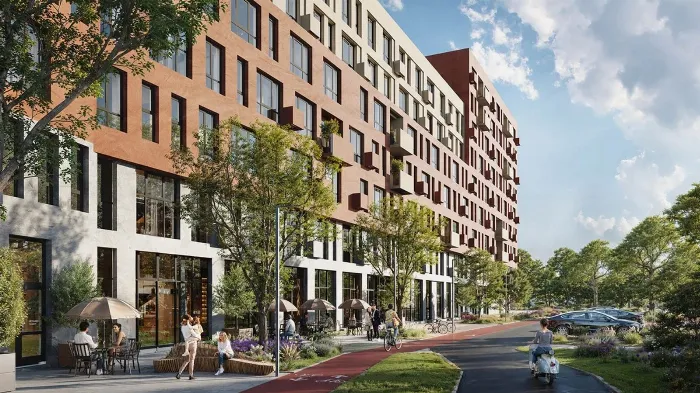
In the renderings, all the complexes look similar: children on the playground, a cyclist on the path, a cafe with flower pots. Three years after moving in, half of it turns into an asphalt playground with four cars and one horizontal bar. Learning to read the infrastructure at the selection stage is a skill that saves the buyer years of disappointment. For comparison, take Father Residential Complex Infrastructure in Lviv, where the service component is included in the project, not added to the advertisement, and let’s go through the checklist.
Step one: look for objects in the project documentation
The render does not guarantee anything, but the project declaration does. Playgrounds, sports areas, and commercial premises on the first floors must be in the documents indicating the areas. If the manager shows a nice picture but can’t find the object in the documents, assume it doesn’t exist.
Step two: calculate the proportions
A healthy guideline is one play area for every one hundred to one hundred and fifty apartments and at least two different age groups: a sandbox for toddlers and a more complex complex for children aged six and over. If there is one slide in a complex for every thousand apartments, you are guaranteed a conflict over the playground every night.
Step three: check who will maintain it
The best infrastructure dies without operation. Ask which management company will accept the complex, what is included in the tariff, who repairs the equipment and cleans the territory in the winter. A developer who has his own service structure and already services completed buildings is a much more reliable option than the promise of "you will choose yourself at the meeting."
Step four: commerce downstairs is infrastructure
The ground floors determine the daily rhythm more than the benches in the yard. A good set is a bakery or coffee shop, a pharmacy, a grocery store "near home" format, beauty services, a parcel delivery point. A bad scenario is a night bar or noisy production under the windows: check whether the developer has any restrictions on tenant formats.
Step five: greenery and what will happen to it
Trees in visualizations are always mature, in reality, seedlings grow for years. Questions to the developer: what percentage of the territory is occupied by greenery, is automatic watering provided, who takes care of the plants. A fountain, landscaped alleys and thematic plantings are expensive to maintain, so their presence in the project says a lot about the seriousness of the intentions.
What does Father look like against the background of Lviv competitors
The complex on Promyslova Street was built as a family environment, and the set of objects confirms this: the courtyard is completely free from cars, with a fountain, landscaped areas and playgrounds for different age groups; the complex includes children’s rooms, a cafe, a beauty salon and sports areas; apartments with terraces provide their own open space above the courtyard. Underground parking has a dual-purpose shelter function, and each family regulates the heat itself thanks to an individual boiler. The external infrastructure reinforces the internal one: the park mountain Vysoky Zamok is within walking distance, schools, kindergartens and polyclinics of the Shevchenkivskyi district are nearby, and the heart of Lviv is a quarter of an hour away. The developer RIEL has been operating since 2003 and is among the five most productive companies in the country in terms of housing put into operation; the completion of the first phase is scheduled for the third quarter of 2027.
Step Six: Reality Test
Before making a deal, visit the already completed complex of the same developer on a weekday evening. See what’s going on with the grounds, whether the lights on the walkways are on, whether the shops are working downstairs, and whether the yard is tidy. Half an hour of such a walk will tell you more than any presentation.
Quick answers
What should be included in the infrastructure of a modern comfort-class residential complex? Minimum: a closed courtyard without transport, two or three play areas, a sports ground, daily demand commerce on the first floors, underground parking, video surveillance.
Does infrastructure affect the resale value of an apartment? Yes, and significantly. Lots in complexes with a living infrastructure sell faster and at a premium to the average price of the area.
Infrastructure is something you use every day, but for which you pay once. Check it in the documents, not on the banner.

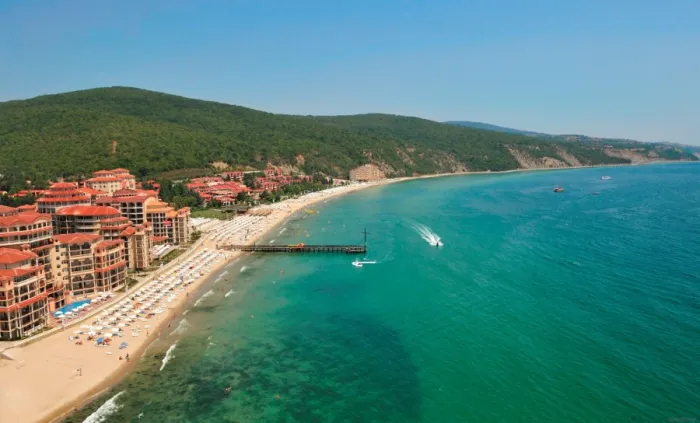
The first line isn’t always the best choice: how to choose an apartment in Sunny Beach that suits your needs
